Container Loading: Mixing SKUs Without Wasting Cubic Meters
A single-SKU container is easy to plan and rarely matches what a distributor actually needs on the other end. How to mix SKUs without blowing the load plan.
By WINVN · · 2 min read

A single-SKU container fills predictably and quotes cleanly, which is why suppliers default to planning around it. A distributor's actual reorder rarely looks like that — it looks like a spread across sizes, materials and packaging formats, because that is what a real customer base is buying. The gap between those two realities is where cubic meters get wasted and freight cost per unit quietly climbs.
Why mixed containers get quoted worse than they should
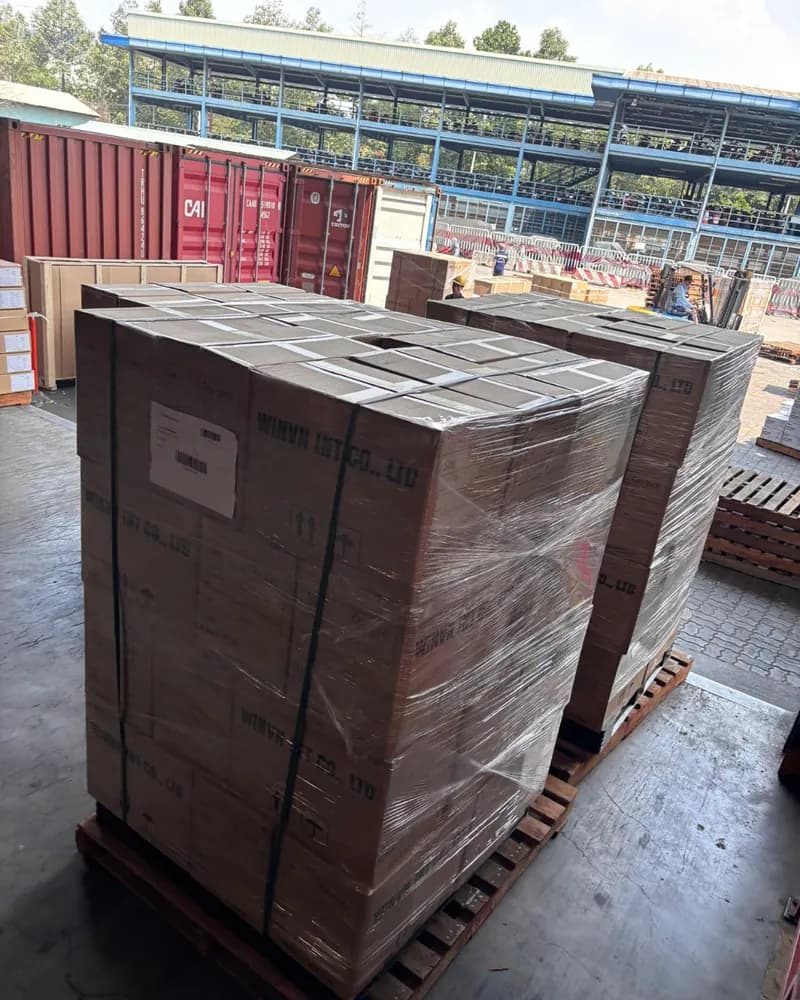
Cartons of different products rarely stack to the same dimensions, and a supplier who has not planned the load specifically will leave gaps that a single-SKU container would not have. The freight cost is fixed per container regardless of how well it is packed, so an inefficiently loaded mixed container is paying full freight for wasted space — a cost that lands entirely on the importer's landed cost per unit.
What an actual load plan looks like
A supplier who mixes SKUs well works backward from carton dimensions across the full product mix, not forward from "how much of each SKU do you want." That means confirming carton sizes for every SKU in the order early enough to plan pallet or floor-loading patterns that minimize dead space — ideally before final quantities are locked, so a small adjustment to one SKU's count can close a gap in the load plan rather than leaving it unfilled.
What to ask a supplier before committing a mixed order
Carton dimensions per SKU, not just per product line. Different sizes within the same product family — coffee wood XS through XXL, for instance — often pack at different cartons-per-cubic-meter rates. A supplier should be able to give you this per size, not a single average.
Whether the load plan is simulated before production. A supplier who can show a rough loading diagram before cartons are produced can catch an inefficient mix while quantities are still adjustable. One who only finds out at the port has already lost that flexibility.
Fill rate as a number, not a description. "We pack it efficiently" is not verifiable. A specific target fill rate — the percentage of container cubic capacity actually used — is a number you can hold a supplier to and compare across quotes.
How this interacts with unit pricing
A quote that looks cheaper per unit on a single SKU can end up more expensive on landed cost once a mixed order is loaded inefficiently, because the freight-per-unit line was calculated against a best-case fill rate that a real mixed order rarely hits. Tier pricing and Incoterm choice both interact with this — freight efficiency is a lever worth negotiating alongside unit price, not after it.
If your reorder is genuinely a mix of SKUs, request a quote with the full mix specified up front and ask for an estimated fill rate — that number tells you more about real landed cost than the unit price grid alone.