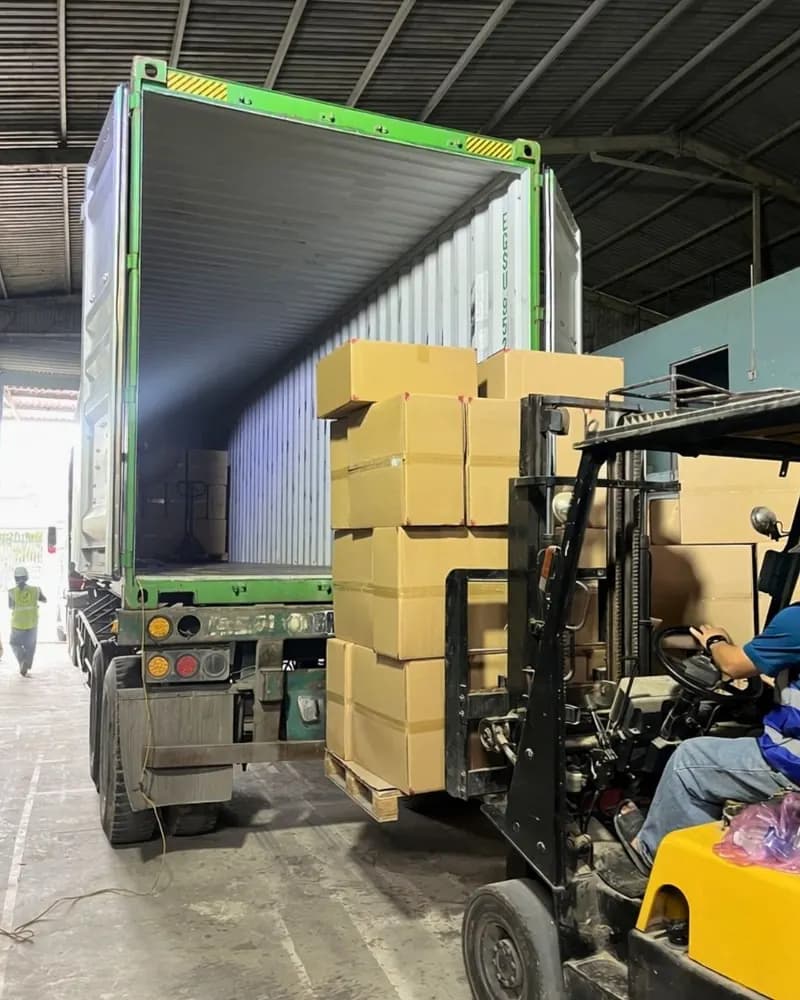
FOB vs CIF vs DDP: Which Incoterm Protects Margin
What FOB, CIF and DDP actually shift onto the importer for a pet chew shipment, and which one to choose depending on your freight relationships.
By WINVN · · 3 min read

The Incoterm on a purchase order is usually the least-discussed line on it, right up until something goes wrong mid-shipment and it turns out to matter more than the unit price did. For a pet chew importer sourcing from Vietnam, the choice between FOB, CIF and DDP is really a choice about who is better positioned to manage the parts of the journey that can go wrong — and that answer is different depending on your own freight relationships, not a universal best practice.
What each term actually shifts
FOB (Free on Board). The supplier's responsibility ends once the goods are loaded onto the vessel at the origin port. From that point, you own the freight booking, marine insurance, and any delay or damage risk during ocean transit. This is the right choice if you already have your own forwarder relationships and negotiated freight rates — you are paying for exactly the transport you need, at your own negotiated cost, rather than a supplier's marked-up freight line.
CIF (Cost, Insurance and Freight). The supplier arranges and pays for the main freight and insurance to your destination port, but risk transfers to you once goods are loaded, same as FOB — the difference is who is contracting and paying the carrier, not who bears the risk during transit. CIF is convenient for a first-time importer without established forwarder relationships, but it usually means paying whatever margin the supplier builds into the freight and insurance line, which you cannot audit as easily as a rate you booked yourself.
DDP (Delivered Duty Paid). The supplier handles everything, including destination customs clearance and duty payment, delivering to your door. This sounds the least risky on paper, and for a first import it can be — but it also means you have the least visibility into what duty was actually paid, whether the correct HS code and preferential origin treatment were used, and whether you could have paid less under EUR.1 or another certificate of origin you qualify for. DDP trades control for convenience, which is a reasonable trade for a first shipment and a worse one for a fifth.
The question that decides it, in practice
Do you already have a forwarder you trust at your destination? If yes, FOB usually protects margin best — you control freight cost and you control the customs clearance process where duty optimization actually happens. If no, CIF or DDP removes a coordination problem you are not equipped to solve yet, at the cost of some margin and some visibility.
Does your destination have a preferential duty scheme you qualify for? Under the EU-Vietnam Free Trade Agreement, for example, a EUR.1 movement certificate can reduce or eliminate duty on qualifying goods — but only if whoever is clearing customs actually applies it. Under DDP, that is the supplier's incentive to manage correctly; under FOB, it is yours, which means you need your own broker who knows to ask for it.
How much does a delay actually cost you? If a missed sailing or a document issue at the port costs you a stockout with a retail account, the coordination overhead of FOB is worth carrying yourself so you have direct visibility into the shipment's status, rather than waiting on a supplier's update.
What we do either way
Regardless of which term the purchase order carries, every shipment leaves with the full document set — commercial invoice, packing list, bill of lading, certificate of origin (Form B, Form VJ, EUR.1 or others depending on destination), phytosanitary certificate, and fumigation certificate where required. The Incoterm decides who is contracting the freight and clearing customs; it does not change what documentation the goods travel with.
Where to start
If you are quoting a first shipment and are not sure which term fits your setup, request a quote and tell us your destination and whether you have an existing forwarder — we will quote it both ways so the tradeoff is visible before you commit to a term.