Why Wooden Dog Chews Arrive Mouldy: Moisture, Container Rain and What a Reading Proves
Why wooden dog chews arrive mouldy: container rain, what a moisture reading proves, what to specify, and what to photograph on arrival.
By WINVN · · 6 min read
Anyone who has opened a container of wooden pet chews and found a white bloom across the top layer asks two questions: where did the water come from, and how do I stop it happening again. WINVN has had to answer both for itself. We lost a container to mould in 2018.
Short answer: on a sea shipment the water is usually not in the wood. It is in the humid air sealed into the container at loading, which condenses on the steel roof as the container cools at night and drips onto the top of the stack. Dry wood is necessary but not sufficient. WINVN measures moisture on every batch and finishes it below 14%, but no supplier controls a container's temperature history once it leaves the gate.
Three places the water comes from
- Moisture still in the wood. Coffee wood comes off the plantation wet. Packed before it reaches a stable moisture content, the carton carries its own water and blooms evenly through the stack.
- Humidity in the air sealed into the container. A container stuffed on a humid morning in Ho Chi Minh City encloses a large volume of warm, wet air for the whole crossing.
- Moisture in the packaging. Corrugated cartons and wooden pallets absorb water. A pallet left uncovered in the rainy season can carry more water into a container than the goods do.
The mechanism that turns the second reservoir into damage is known in marine cargo handling as container rain or cargo sweat. The steel heats during the day and cools at night; when the inside surface drops below the dew point of the enclosed air, water condenses on the ceiling and walls and drips down. That is why condensation damage is worst on the top layer and near the doors, and why it can appear in a container whose goods were dry at loading. Any marine surveyor will describe the same mechanism.
What a moisture reading proves
Moisture content is the mass of water as a percentage of the oven-dry mass of the wood. Below roughly 20%, most wood-decay and mould organisms struggle to establish themselves. WINVN works to below 14%, which leaves a margin for the wood to pick up moisture in transit.
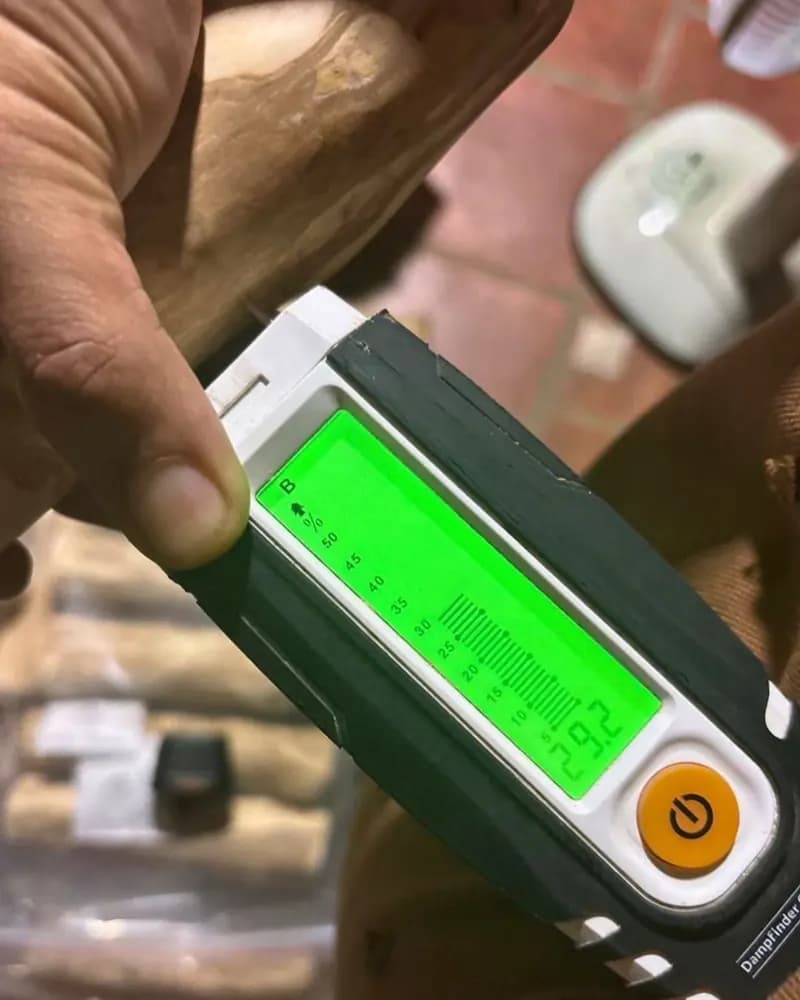
A pin meter measures one piece, at one point, on one day. A photograph of a meter reading 10.5% proves that piece read 10.5% on that day. It does not prove every piece in every carton read the same, or that the reading held after five weeks at sea. That is why WINVN reads five points per check on every batch, records the result before packing and again before the container is sealed, and sends the reading with the packing list rather than writing a promise.
What WINVN will not put in writing
WINVN does not write "mould-free" or "guaranteed dry on arrival" into a contract. Once the doors close and the container is handed to the carrier, its temperature and humidity history is outside the supplier's control. What we commit to instead:
- a measured and photographed moisture result before packing;
- an agreed packing specification;
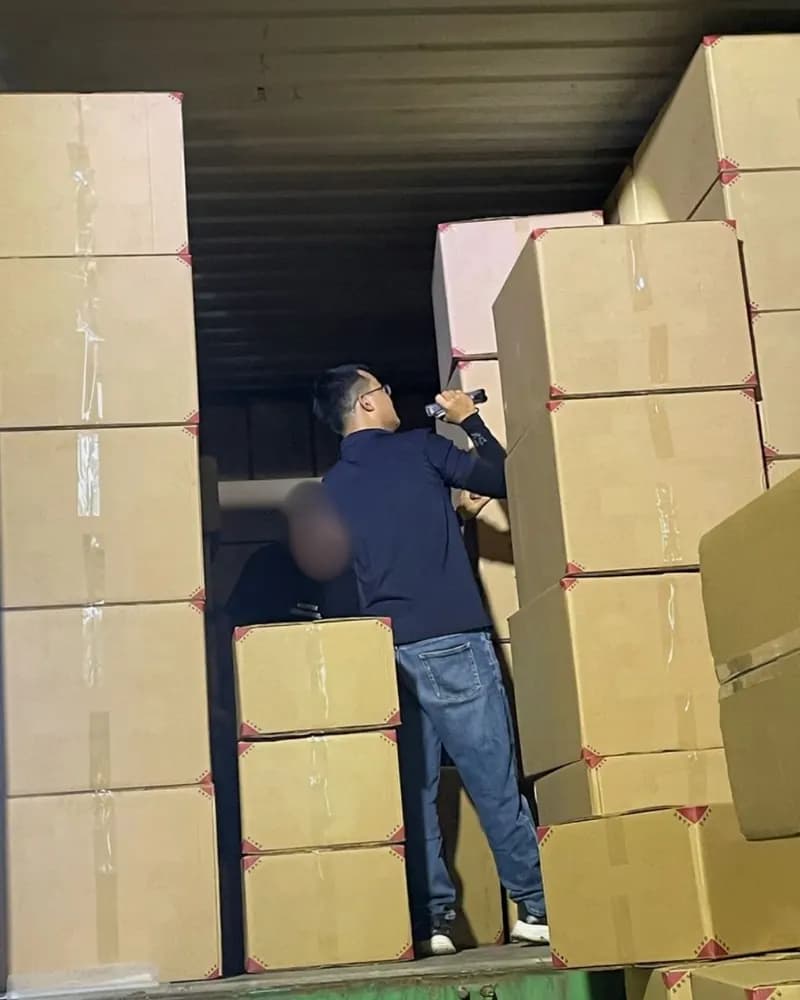
- your right to appoint an independent inspection company to take its own readings before the seal goes on.
What you can specify at order stage
- Vacuum packing or bulk polybag. Vacuum packing removes most of the air, and so most of the enclosed humidity, from the primary pack. Bulk polybag is cheaper and adequate for shorter routes and drier destinations.
- Container desiccant. Hanging desiccant absorbs moisture from the container air during the voyage. It is inexpensive compared with a claim and is the single most useful addition for a wet-season sailing. WINVN fits it on request.
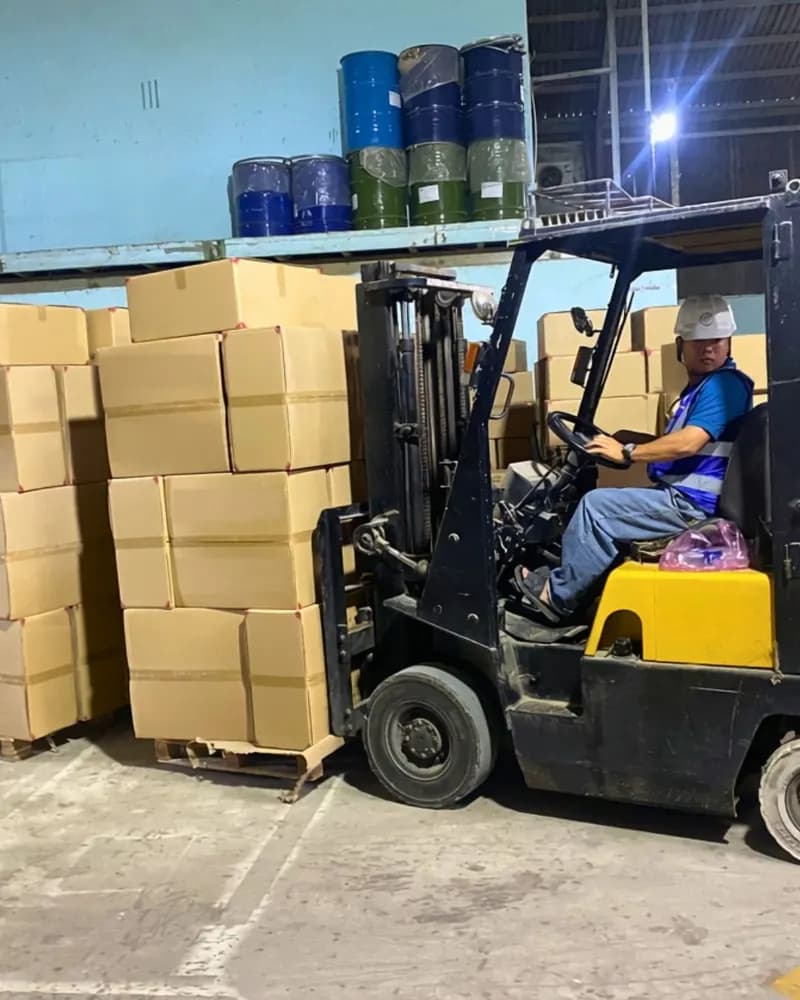
- Pallet condition and stuffing time. Pallets kept dry and under cover, and stuffing in the early morning rather than after rain, reduce the water that goes in with the cargo.
Transit from Cat Lai to Northern Europe runs 30 to 35 days port to port. The packing has to survive that.
The first hour after the doors open
If a shipment arrives with a bloom, the pattern decides whether it is a cargo claim against the carrier or a supplier claim. Collect evidence before anything is moved:
- Photograph the container interior before unloading: ceiling, side walls and door end. Water marks and rust runs on the ceiling point to condensation.
- Record where affected cartons sit. Top layer and door end suggests condensation. Damage spread evenly through the load, including the middle and bottom, suggests moisture that travelled with the goods.
- Open a carton from the middle of the stack, the least exposed position.
- Take your own readings from several pieces in several cartons. A pin meter is cheap.
- Note outside temperature and humidity at unloading.
- Send photographs before disposing of anything. Once cartons are destroyed, no one can assess the claim. Cargo insurance is covered in our insurance article.
Documents that are not mould controls
- Phytosanitary certificate: records that the consignment met the importing country's plant-health requirements at inspection. It is not a condition report.
- Fumigation certificate: records an insect treatment. Fumigation is not an antifungal treatment and does nothing about condensation.
Storing chews after delivery
- Keep the bag sealed until the goods go out.
- Store on pallets, off the floor and away from exterior walls and roller shutters.
- Keep it cool, dry and ventilated, roughly 25 to 28 °C with air moving, and out of direct sun.
- If you engrave, label or repack locally, finish what you open the same day.
- Keep one sealed bag per lot as a retained sample and open it at month six. It is the cheapest way to tell later whether a problem came from the shipment or the warehouse.
Questions buyers ask
What moisture content should wooden dog chews be shipped at?
WINVN finishes coffee wood below 14%, measured on every batch before packing and again before the container is sealed. Staying well under about 20% leaves margin for moisture picked up in transit.
Why did my chews arrive mouldy if they were dry when packed?
Most often because of condensation from humid air sealed in the container. The telltale pattern is damage concentrated on the top layer and at the door end.
Has WINVN ever lost a shipment to mould?
Yes, in 2018. The damage pattern pointed to condensation. Since then moisture is measured and photographed on every batch, pallets and cartons are kept under cover before stuffing, and desiccant is discussed with the buyer for wet-season sailings.
Ask for the moisture reading and packing specification for your batch before it ships.