Questions to Ask a Coffee Wood Supplier Before You Order
A vetting list that goes beyond price and MOQ — moisture control, bark removal, lab reports and who actually inspects the goods before they ship.
By WINVN · · 3 min read
Most coffee wood suppliers will answer "yes" to almost any direct question — is it natural, is it safe, is it good quality. The questions worth asking are the ones a supplier without proper process cannot answer specifically, only in general terms.
Here is the list, in the order it tends to expose problems.
Material and process questions
Where does the wood come from, and can you tell me the province? A supplier who can name Gia Lai or Đắk Lắk and describe the coffee-replanting cycle is describing an actual supply chain. A supplier who says only "Vietnam" or "local farms" may not be tracking origin at all, which matters if your customers ever ask.
Is bark fully removed, and at what stage? Bark holds surface contamination and flakes differently from the inner wood. This should happen early in processing, not as an afterthought before packing.
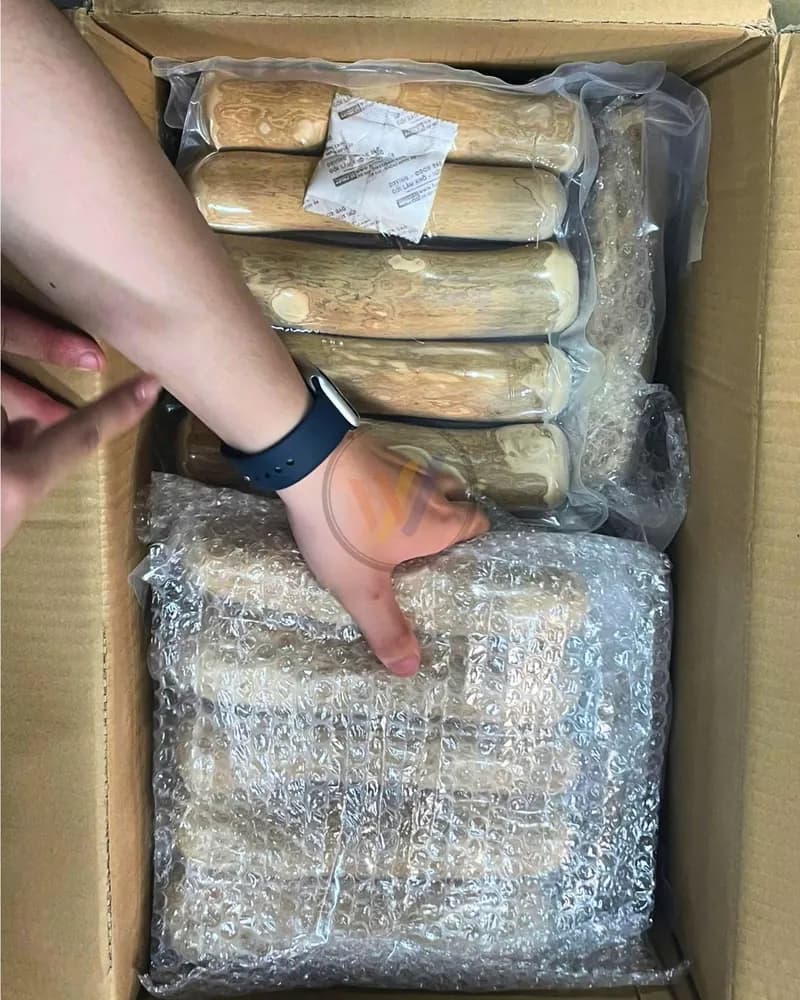
How is moisture controlled, and when is it checked? This is the single biggest driver of container mould claims. "At the end" is the wrong answer — moisture needs checking at multiple stages, ideally with a moisture meter reading recorded, not judged by feel.
Is anything applied to the wood — coating, hardener, binder, scent? The honest answer for a genuine natural chew is no. If a supplier describes any treatment beyond drying, cutting and sanding, ask exactly what it is and get the safety documentation for it specifically.
Documentation questions
Can you show me the caffeine test report? Caffeine is genuinely toxic to dogs and is concentrated in the coffee bean, not the wood — but a buyer's job is to verify that, not assume it. Any supplier making a no-caffeine claim should produce a laboratory report, not a description.
What phytosanitary and fumigation documents do you provide, and do they change by destination? Wood products need quarantine clearance in most markets, and the requirements are not the same for Japan, the EU and Australia. A supplier who gives you one generic answer for every country has not actually checked.
Do you have general toxicity or non-toxic testing beyond caffeine? Ask what was tested, by whom, and ask to see the actual report rather than a summary.
Capacity and consistency questions
What is your product MOQ, separately from any packaging MOQ? These get quoted together more often than they should. Our own coffee wood chews start at 50 pieces at the product level — packaging minimums are a separate, later conversation. Related reading: low-MOQ sourcing.
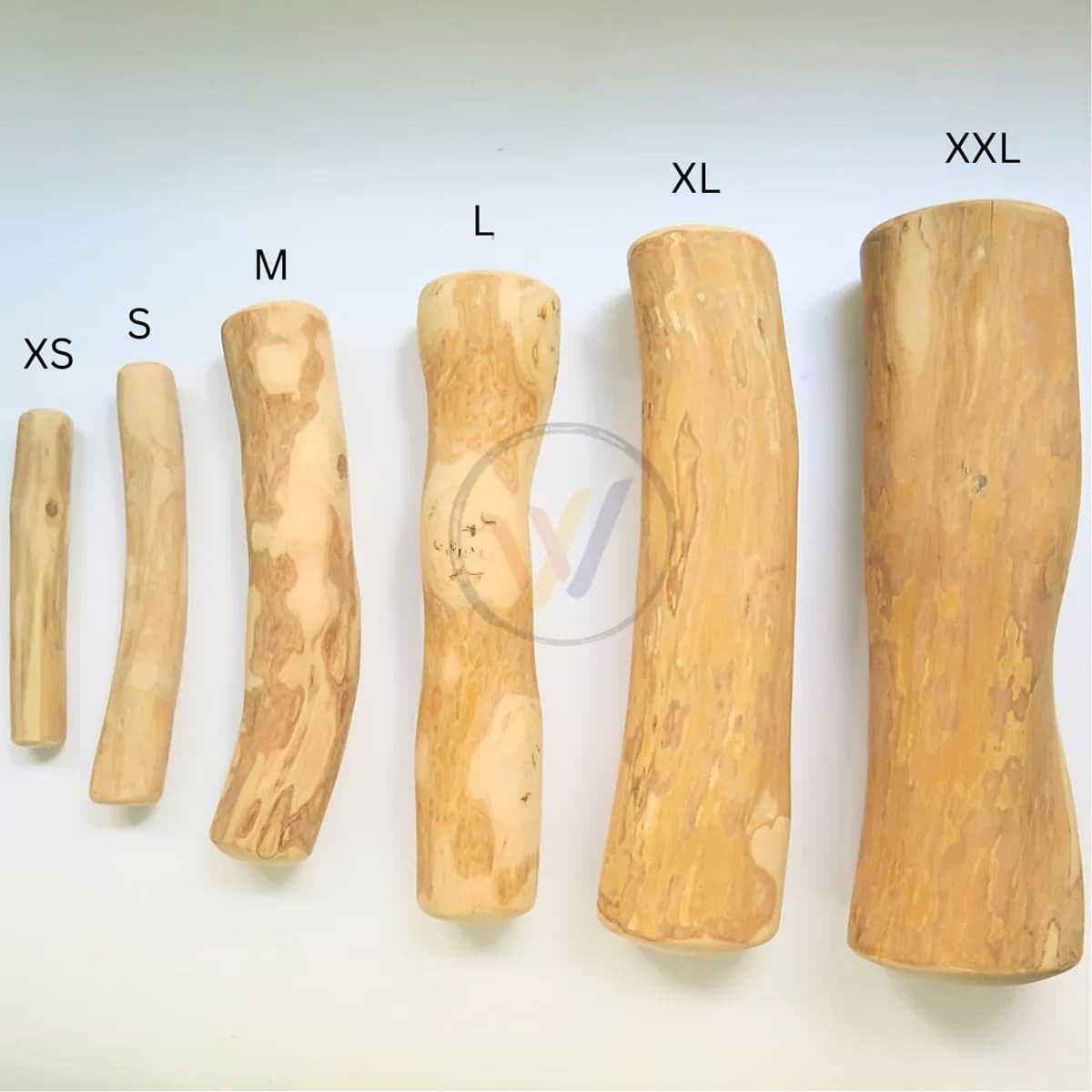
How do you sort sizes, and how much variance is acceptable inside a band? Natural wood tapers, so a piece cut to an XL length can measure closer to M at one end. Ask whether sizing happens after cutting as a distinct step, and what the tolerance is.
At which stages does quality control actually happen, and who does it? "We check quality" is not an answer. Ask for the stages by name — material inspection, moisture check, size sort, finished-goods inspection — and whether it is a dedicated role or whoever is free that day.
Can I get a physical sample before committing to production? This is the one question that is not negotiable. If a supplier wants a production commitment before you have held the actual product, that alone should end the conversation.
What good answers sound like
A supplier who has real process gives specific, checkable answers — a province name, a documented moisture range, a named test lab, a described inspection stage. A supplier without it gives you reassurance instead of specifics: "don't worry," "we're very strict," "our quality is the best." Reassurance is cheap. Specifics cost a supplier nothing to give if they are true, which is exactly why their absence is the signal worth noticing.
Request samples and ask us these same questions directly — we would rather answer them before an order than after one.