Does Coffee Wood Contain Caffeine? What Is Known, What Is Not, and What to Ask
Why WINVN makes no caffeine-free claim for coffee wood dog chews, what plant research says about caffeine in coffee trees, and what to ask.
By WINVN · · 4 min read
Most buyers ask about caffeine before they ask about price. It is the right instinct: caffeine and related methylxanthines are toxic to dogs, and "coffee" is in the product name. So here is the plain position.
Short answer: WINVN does not hold a laboratory assay for caffeine in coffee trunk wood, so we do not call our chews caffeine-free and we do not publish a caffeine figure. Published plant research places caffeine mainly in the leaves, fruit and seeds of the coffee plant rather than in mature woody trunk tissue, but that research did not measure our material. Until a report with a laboratory's name on it exists, the honest answer is "not confirmed by test".
What the plant research says
Research on caffeine metabolism in Coffea arabica and Coffea canephora (Robusta), published by Perrois and colleagues in the plant-science journal Planta in 2015, describes caffeine being made in young leaves and accumulating in the leaves and the developing bean. Young Robusta leaves were reported at around 3% caffeine by dry weight, and the genes that build caffeine were expressed far more strongly in leaves than in maturing beans. That work covers leaves and fruit. It does not report the trunk as a caffeine store.
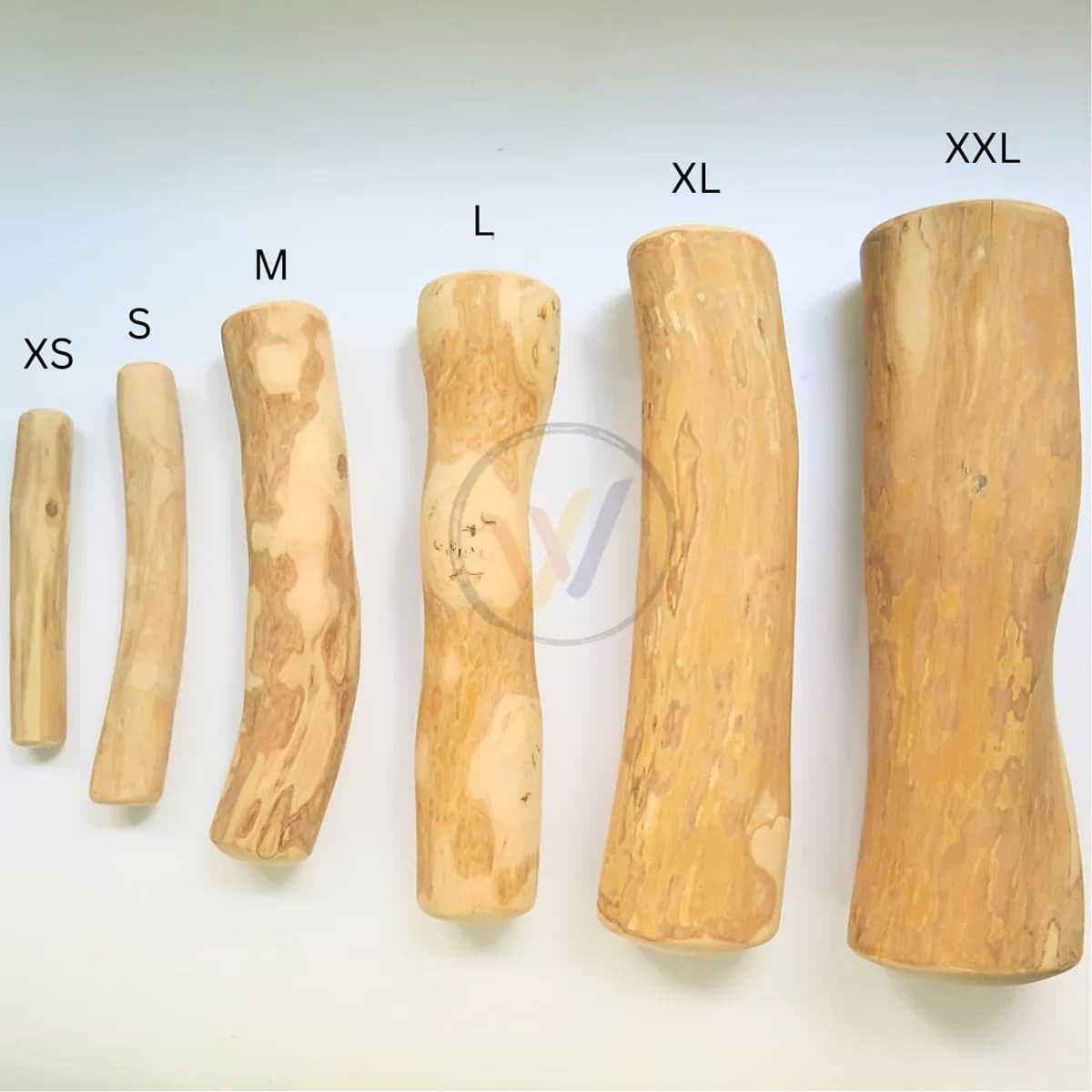
The woody trunk and thick branches used for chews come from Robusta trees over 20 years old, taken out at the end of their productive life during replanting. On the plant-science picture above, trunk wood is not where caffeine is stored.
Why that is not the same as "caffeine-free"
Three reasons stop us turning the research into a claim:
- The published measurements are of leaves and beans, not trunk wood. A number lifted from those studies would not describe this material.
- Species and growing conditions vary. Our wood is Robusta from the Central Highlands of Vietnam. Research on other species or other tissues does not transfer automatically.
- A claim on a pack needs evidence behind it at the moment it is printed. In the EU, feed labelling rules require claims to be objective and verifiable. A caffeine-free statement without a laboratory report is neither.
So the position is deliberate: no figure, no claim, until testing is done. When a laboratory report exists, it will be published with the laboratory's name, the method and the sample description.
What competitors say, and why it matters to you
Several coffee wood brands print "caffeine-free", "non-toxic" or "100% safe" on their packs. That is their statement. If you copy it onto your own listing, it becomes yours, and you carry the liability if a customer, a marketplace or a regulator asks for the evidence. Before you repeat any caffeine statement, ask the supplier for the actual report, not a sentence on a specification sheet. More on this in what not to print on a dog chew pack.
What a buyer should actually check
- Ask for the laboratory report. Lab name, accreditation, method, date, and whether the sample was trunk wood from the supplier's current source.
- Ask what the sample was. A report on "coffee wood" from a different species, a different tissue or a different region does not describe your stock.
- Ask what else was tested. Heavy metals, for example, are a separate question from caffeine. See safety testing for natural pet chews.
- Consider commissioning your own test if your channel requires one. WINVN will supply samples from the lot you are buying.
What WINVN can document today
- One untreated plant material: no oil, coating, flavouring, binder, preservative or colouring.
- Bark removed before drying.
- Moisture measured on every batch, finished below 14% before packing.
- A phytosanitary certificate for each shipment recording the botanical genus, Coffea.
- Photos and video of your production run before the container is sealed.
And the safety guidance that belongs with any hard chew, as set out in FEDIAF's guidance on chews and treats for dogs: match the size to the dog, supervise chewing, and take the piece away once it is small enough to swallow.
Questions buyers ask
Are coffee wood dog chews caffeine-free?
WINVN does not make that claim. There is no laboratory assay of our coffee trunk wood yet. Plant research places caffeine mainly in leaves, fruit and seeds rather than mature trunk wood, but that is not a test of this material.
Is caffeine dangerous for dogs?
Yes. Caffeine is a methylxanthine and is toxic to dogs, which is exactly why a buyer should ask for evidence rather than accept a statement. If a dog shows signs of illness, contact a veterinarian.
Will WINVN print "caffeine-free" on my private-label packaging?
No, not without a laboratory report behind it. We will print verifiable descriptions instead, such as "one untreated plant material, nothing added" and "moisture measured below 14% before packing".
Where does the wood come from?
Robusta coffee trees over 20 years old on smallholder plots in Dak Lak and Gia Lai, removed at the end of their productive life as part of normal replanting. See is coffee wood safe for dogs? for how the material behaves when chewed.
Request three free samples from the lot you would actually buy if you want to test them yourself.