How to Choose Dog Chew Sizes for a Range (XS to XXL)
A size chart tells you what fits one dog. Choosing a size mix for a whole market is a different problem. Here is how to think about both.
By WINVN · · 3 min read
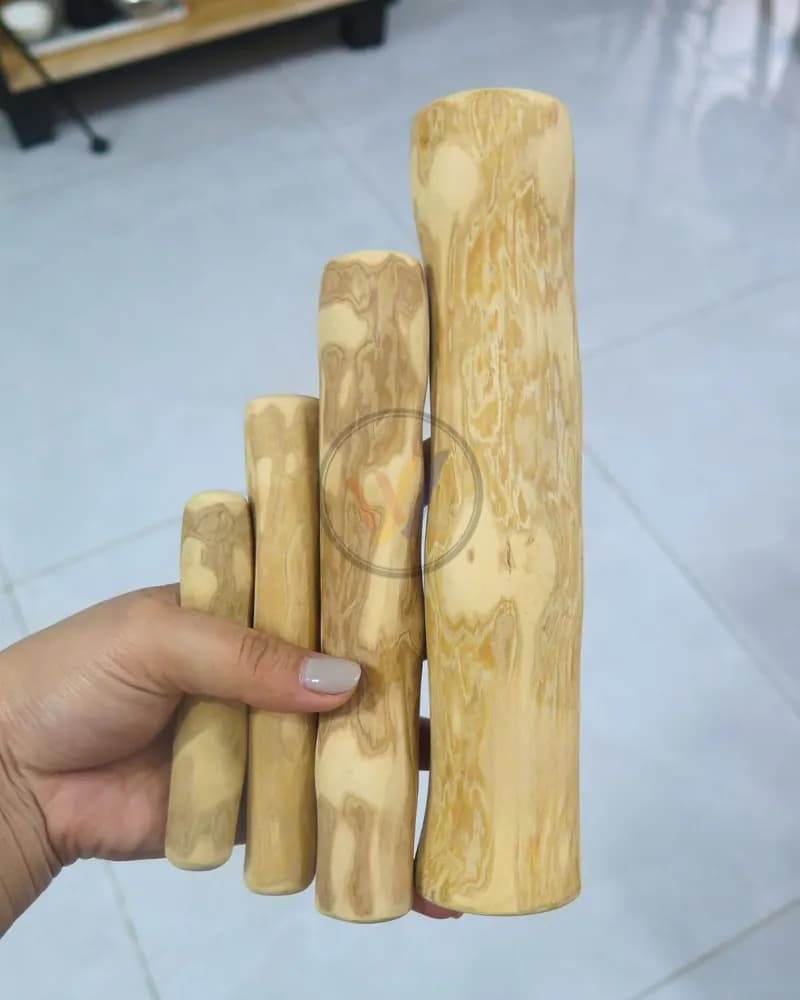
There are two size questions, and buyers often conflate them. The first is which size suits this dog. The second is which sizes should I stock. The answer to the first is a lookup. The answer to the second decides whether your first order sells through or sits in a warehouse.
The size chart
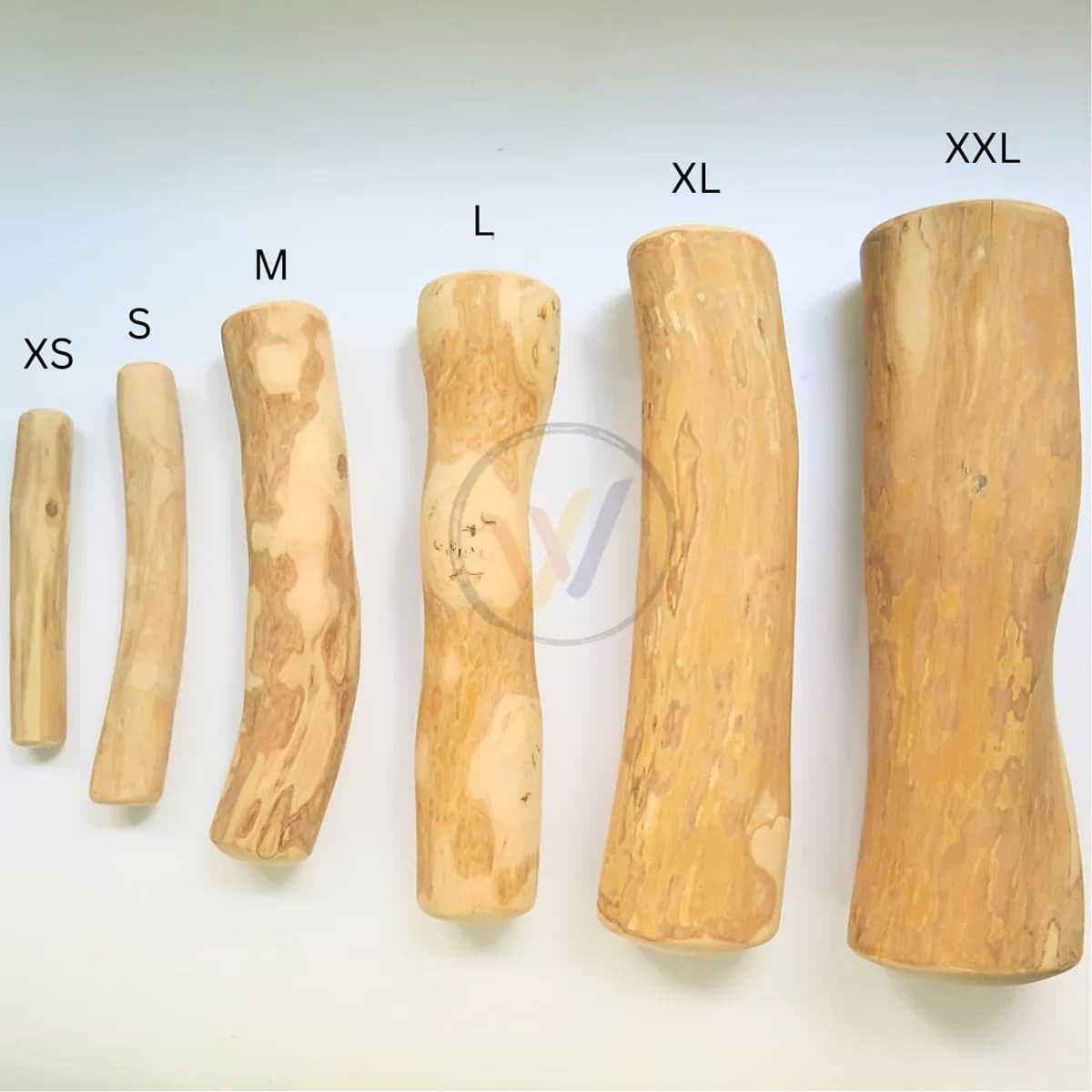
WINVN's coffee wood chews run in six bands, from the official size chart:
| Size | Dog weight | Approx. diameter | |---|---|---| | XS | Under 3 kg | 1.5–2 cm | | S | 3–5 kg | 2–2.5 cm | | M | 5–8 kg | 2.5–3.5 cm | | L | 8–12 kg | 3.5–4.5 cm | | XL | 12–20 kg | 4.5–5.5 cm | | XXL | Over 20 kg | 5.5–7 cm |
Weight is the variable, not breed. Breed names get printed on packaging because customers recognise them, but a "Labrador" ranges from 25 to 36 kg and a "Poodle" spans three entirely different size standards. If you use breed names in your marketing, treat them as illustration and keep weight as the rule.
There is an interactive version of this on the product page that also accounts for chewing behaviour.
Behaviour shifts the answer
Weight gives the band. Two things move it:
- A hard chewer gets through a correctly-sized chew faster than the owner expects, and then complains the product "did not last". Offering the next size up solves this and costs you nothing to suggest.
- An older or gentle dog often ignores an oversized chew entirely. The size below gets used; the correct-by-weight one gathers dust.
Neither of these overrides the weight band as a safety floor. You never go smaller than the band for a strong chewer.
Choosing a size mix for a market
This is the part that actually matters commercially. A few observations from orders we have shipped:
Small-dog markets need a different curve. In markets dominated by apartment living and small breeds — much of East Asia, urban Europe — demand concentrates in S and M with real volume in XS. Stocking a balanced mix in those markets leaves you with XL and XXL you cannot move.
Large-dog markets are the mirror image. Where working and sporting breeds are common, M through XL carries the range and XS barely sells.
A "balanced" mix is a compromise, not a default. It is the right answer when you genuinely do not know your customer mix yet — which is a good reason to start with a small first order and let sell-through tell you.
As starting points, not quotes:
- Small-dog market: heavier on XS/S/M, minimal XXL
- Balanced: weighted to M and L
- Large-dog market: weighted to L and XL, minimal XS
We will suggest a specific split once we know the country and channel, and adjust it after your first sell-through.
Two practical mistakes
Ordering one size to test. It tells you almost nothing. A single size that does not match your customers' dogs reads as "the product did not sell" when the real answer was "the size was wrong". Mixed-size orders are normal and the MOQ applies to the order, not to each size.
Assuming the mix from the previous supplier. If you are switching from an antler or nylon product, the size distribution will not transfer. Different materials wear at different rates, so the size an owner repurchases is not necessarily the size they started with.
Getting it right the first time
The cheapest way to settle a size mix is to hold the full lineup, put it next to the dogs your customers actually own, and decide from there. Request a sample set with the sizes you are considering — tell us the market and we will include the two we think you have missed.