From Central Highlands Coffee Trees to Pet Shop Shelves
What happens to a coffee tree after twenty-five years of production, and how it becomes a dog chew. The supply chain, without the marketing gloss.
By WINVN · · 3 min read
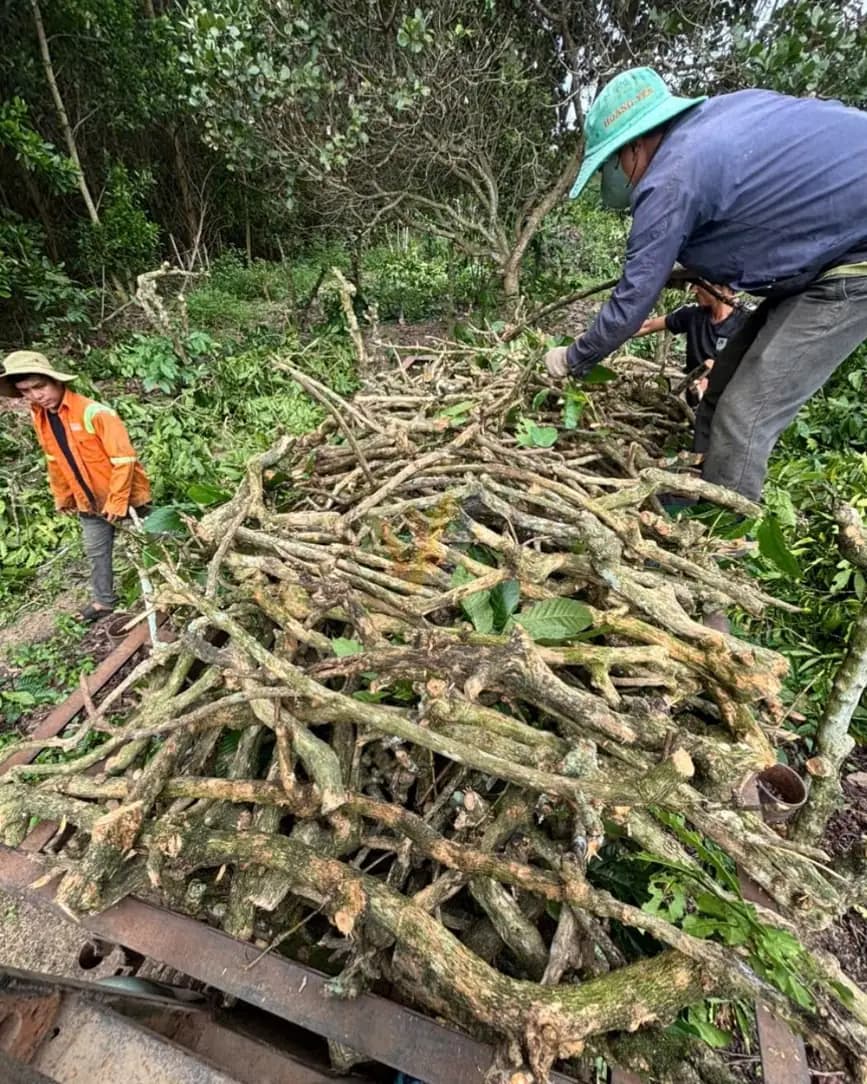
A coffee tree produces well for twenty to twenty-five years. After that, yield drops far enough that the economics stop working and the farm replants. The old trees come out.
That moment — thousands of hectares of Gia Lai and Đắk Lắk cycling through replanting — is where this product comes from.
What used to happen to the wood
Firewood, mostly. Sometimes it was burned in the field. It has calorific value and very little else in a local market, so it was disposed of at whatever the nearest buyer would pay.
Buying it for pet products changes two things. The farm gets a second revenue event from a tree it had already written off, and the raw material for our product required nobody to plant anything on our behalf. That second point is the one worth being precise about: this is a by-product use, not sustainable forestry. We did not grow these trees and we do not claim credit for their carbon.
The chain, step by step
Sourcing. Wood is bought from farms in Gia Lai and Đắk Lắk that are replanting. We can tell you the province and the season a batch came from. We cannot tell you the individual farm — the material is aggregated before it reaches us, and claiming farm-level traceability we do not have would be worse than admitting the limit.
Grading. Not every trunk is usable. Cracked wood, insect-damaged wood and pieces too thin to yield a size band get rejected here. This is the cheapest place in the whole chain to reject material, which is why it happens first.
Bark removal. The outer bark is stripped so only the dense inner wood goes forward. Bark holds surface contamination and flakes in a way the inner wood does not.
Drying. Wood is dried to bring moisture down to a stable level before cutting. Get this wrong and the product develops mould inside a sea container three weeks later — which is a failure the buyer discovers, not the factory.
Cutting and sanding. Pieces are cut to the length and diameter of each size band, then surfaces are smoothed and ends rounded.
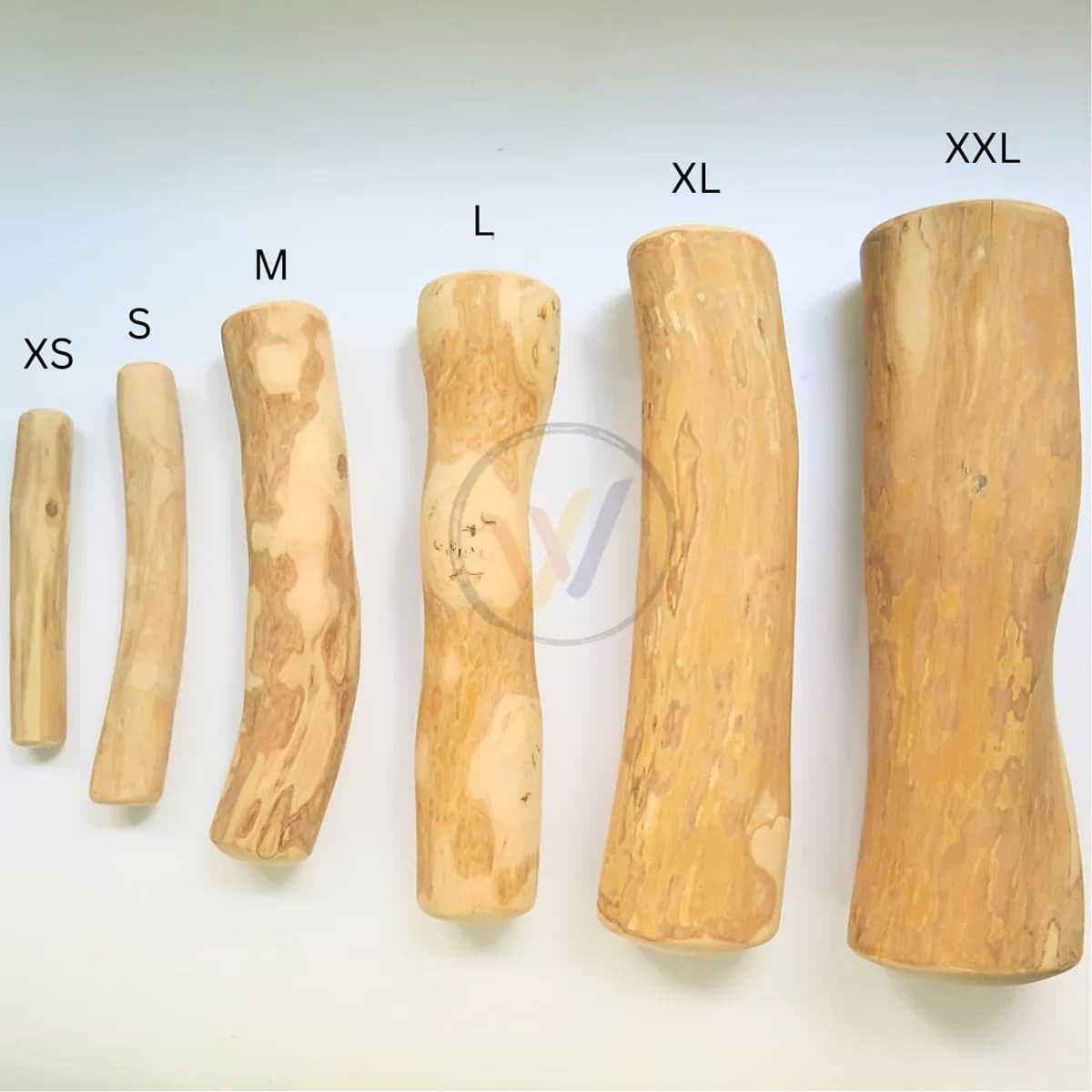
Size sorting. A separate step, and a necessary one. Natural wood tapers and bends, so a piece cut to an XL length can measure M at one end. Sorting after cutting is what makes the six bands mean anything.
Inspection and packing. The finished-goods check, then labelling, boxing and palletising.
Processing happens in the same provinces the wood comes from rather than near the port. That is a deliberate choice — it shortens the chain and it means the work stays in the region, including in communities where formal employment is scarce.
What this does and does not mean
It means the material is a genuine by-product of an existing agricultural cycle, that the product contains one thing and nothing else, and that a retailer can tell customers where it came from with reasonable specificity.
It does not mean the product is carbon-neutral. It ships by sea from Viet Nam like everything else, and we are not going to run the arithmetic in a way that flatters us.
If you sell in a market where customers ask follow-up questions — and eco retail is exactly that market — the second paragraph is more useful to you than the first. A story that survives scrutiny is worth more than one that sounds better.
For retailers building a material story
Three things worth having on the shelf card:
- The tree's age. "Twenty-five years of coffee, then a second life" is concrete and true.
- The province. Gia Lai and Đắk Lắk are real places customers can look up.
- The single-material claim. No coating, no dye, no binder. It is one thing.
We will supply photographs from the farms and the production floor for your own use. They are real images of real work, which is increasingly unusual in this category.
Request samples and tell us what your customers ask about — we will send the material story alongside the products.