Is Coffee Wood Safe for Dogs? What Buyers Should Actually Check
Coffee wood chews do not splinter the way most timber does, and they contain no caffeine. Here is why, and what a buyer should verify before ordering.
By WINVN · · 3 min read
Two questions come up in nearly every first conversation with a buyer looking at coffee wood: does it splinter, and does it contain caffeine. Both are reasonable. Both have answers that are more specific than "no".
Why coffee wood behaves differently from other timber
When a dog chews a stick from the garden, the wood usually fails along its grain. Softwoods like pine have long, straight fibres and low density, so a bite splits them lengthwise into sharp shards. That is the failure mode that worries vets, and it is the reason "give your dog a stick" is bad advice.
Coffee wood fails differently. Coffea robusta grown for production is dense and its fibre structure is short and interlocked rather than long and parallel. Under sustained chewing it abrades — the surface wears away in small fibrous particles — instead of cleaving. You can see this on a used chew: the ends become frayed and rounded, not pointed.
This is a property of the species and the way the wood is prepared, not a treatment applied to it. No coating, hardener or binder is involved.
What still matters
Abrasion resistance is not indestructibility. A determined chewer working on an undersized piece will eventually break it down, and the last small fragment is a swallowing hazard exactly as it would be with any consumable chew. Two things follow for a buyer:
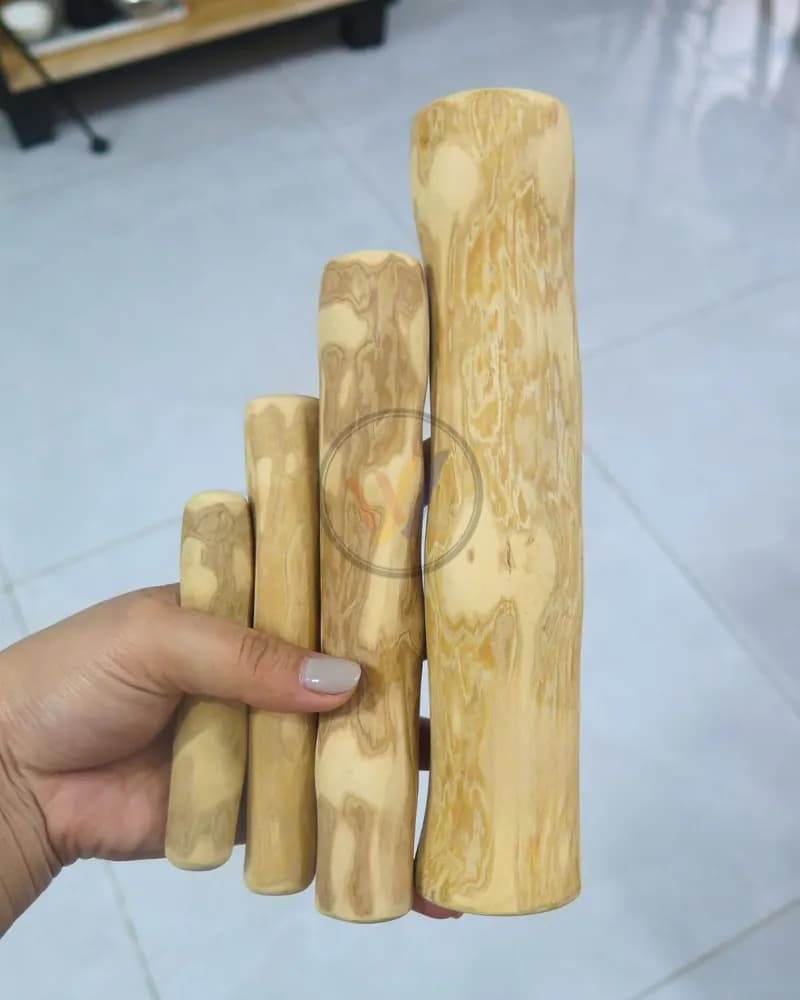
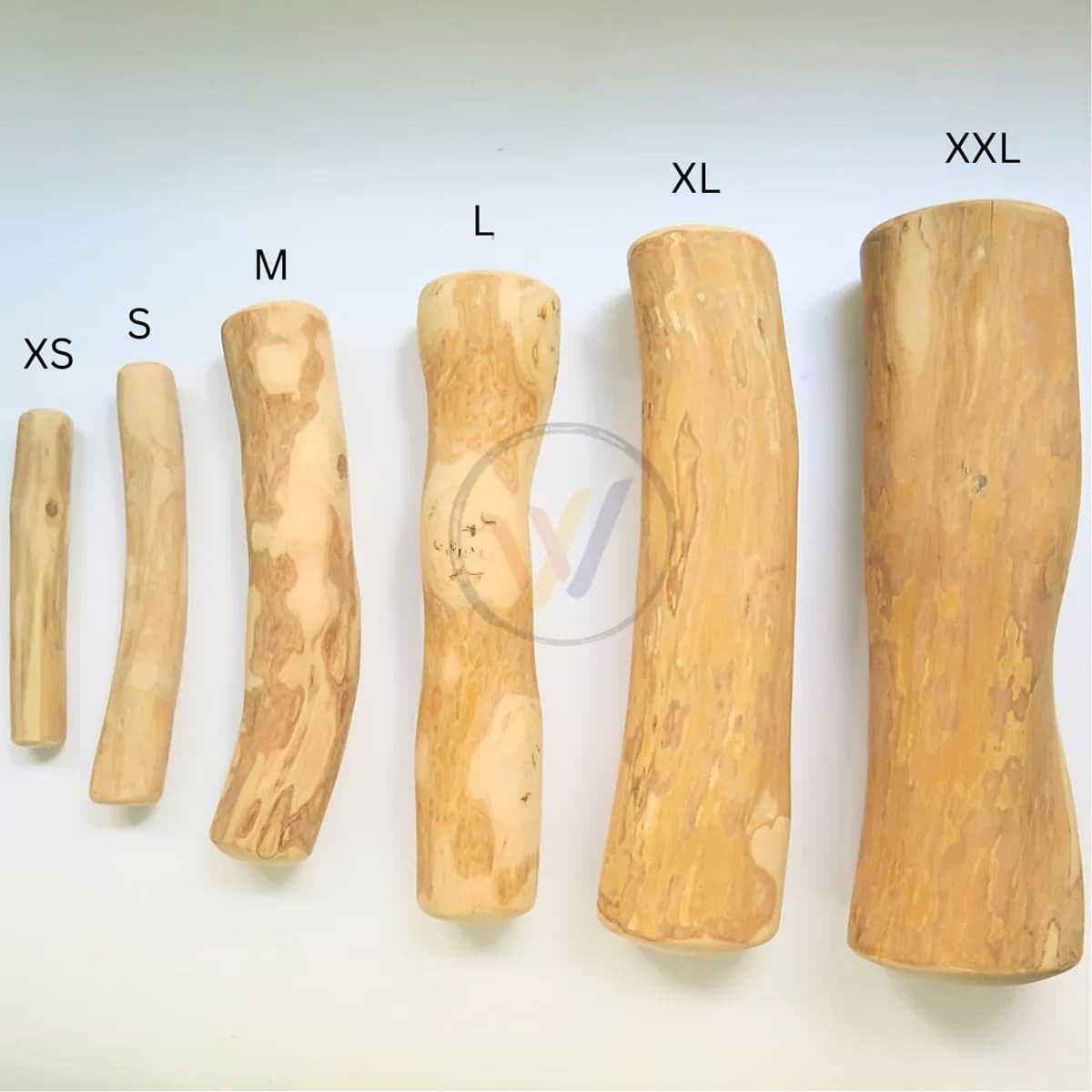
- Size the product to the dog. An XS chew given to a 30 kg dog is a choking risk regardless of what it is made of.
- Say so on the packaging. Supervision and replacement-when-small are standard warnings on chew products for good reason, and retailers in most markets expect to see them.
The caffeine question
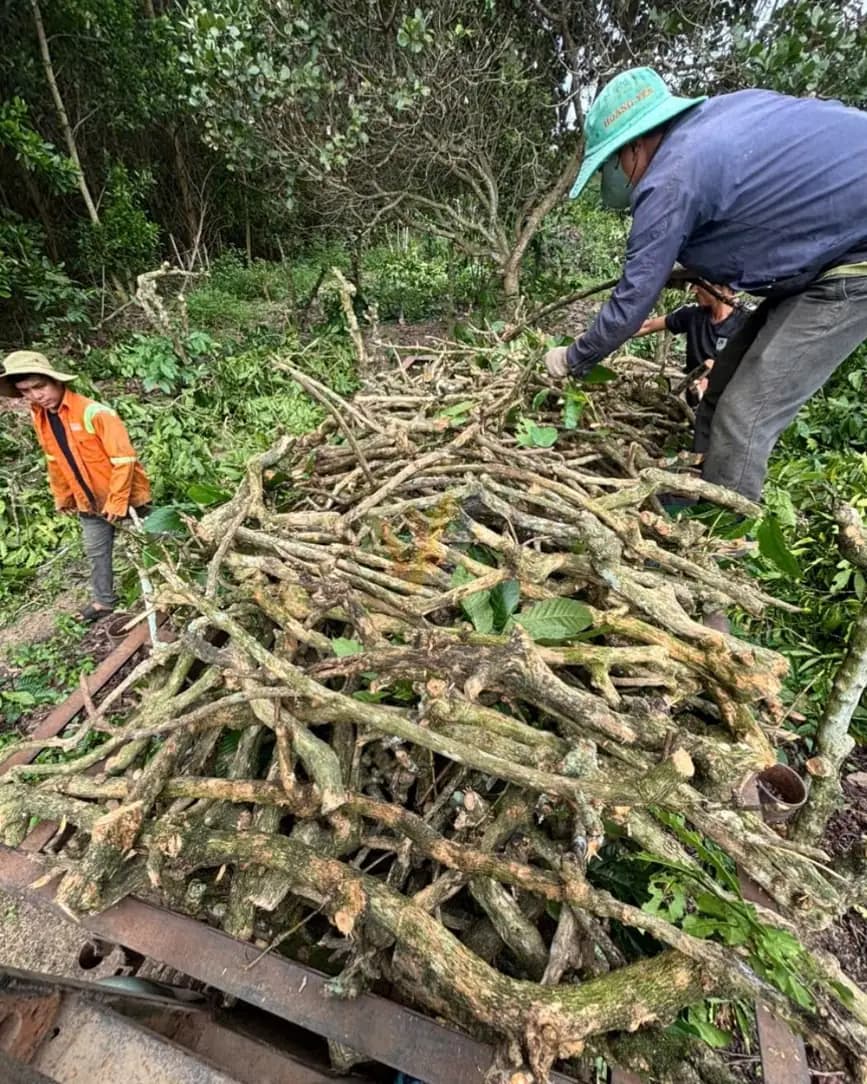
Caffeine is produced in the coffee plant and concentrated in the seed — the bean. It is present in leaves at lower levels. The woody trunk and branches are not where the plant stores it, and the trees used for chews have finished their productive life and been felled before processing.
Caffeine is genuinely toxic to dogs, so this is not a question to wave away. The right answer for a buyer is: ask for the test report. Any supplier making a no-caffeine statement should be able to produce laboratory analysis supporting it. We keep ours on the certificates page and will send the current version on request.
If a supplier cannot produce a report, that is your answer.
What to check before you order
A short list, in the order that catches the most problems:
- Moisture. Under-dried wood develops mould inside a sea container. Ask how moisture is controlled and at which stages it is checked. If the answer is "at the end", the batch has already been made.
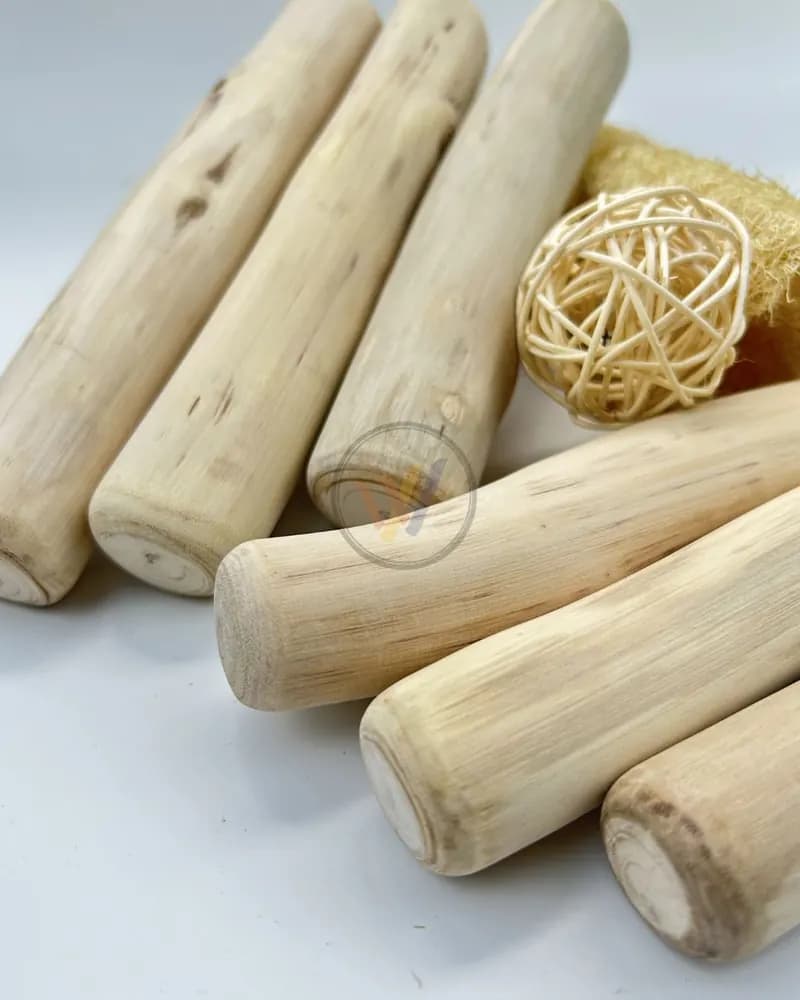
- Bark removal. Bark holds surface contamination and flakes in a way the inner wood does not. Confirm it is stripped during preparation.
- Test reports. Caffeine and general toxicity, as above.
- Phytosanitary and fumigation certificates. Wood products need them in most destinations, and requirements differ. Confirm the destination's current rules before production, not at the port.
- A physical sample. Photographs cannot tell you how a chew smells, how heavy it is, or how the surface feels. Hold one.
The honest limits
No manufacturer can promise a chew is safe for every dog. Chewing behaviour varies enormously within a breed, let alone across breeds; an older dog with worn teeth and a two-year-old working breed are different propositions entirely. What a manufacturer can do is control the material, the size accuracy, the moisture and the finish, and be straightforward about the rest.
If you are evaluating coffee wood for a range, the fastest way to a decision is to hold the product at the sizes you would actually stock. Request samples and tell us the market — we will suggest which sizes to compare.